
When Water Turns to War
In India, rivers are revered as goddesses who give life. But step beyond the hymns and rituals, and you’ll find a far darker truth, these sacred waters have become battlegrounds. Two rivers, in particular, have ignited fury across states, shattered communities, and pushed courts to their limits. The Cauvery in the south. The Mahanadi in the east. Both are drowning not in rain, but in conflict. Riots. Shutdowns. Supreme Court showdowns.
This is the explosive reality behind India’s most volatile inter-state river dispute.
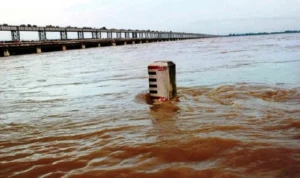
The Cauvery Dispute: A Century-and-a-Half of Rage
Meet the Cauvery, a river born in Karnataka’s misty hills, winding through Tamil Nadu before vanishing into the Bay of Bengal. Sounds peaceful. Feels like war. For 150 years, a brutal tug-of-war over every drop have been locked in Karnataka vs Tamil Nadu.
Karnataka controls the source. When monsoon clouds burst over Coorg, it’s their soil that drinks first. They argue: Why should our farms wither so others can thrive? Tamil Nadu, downstream, fires back: Our Delta farmers have tilled this land for generations. Cut the flow, and you cut our survival.
This isn’t just politics, it’s fire and fury. In 2016, when the Supreme Court ordered Karnataka to release water, Bengaluru erupted. Buses burned. Streets turned to war zones. Tear gas filled the air. The dispute didn’t start in courtrooms, it exploded on the streets.
Legally, the Cauvery Water Disputes Tribunal ruled in 2007: Tamil Nadu gets 404 TMC, Karnataka 284, with crumbs for Kerala and Puducherry. A Cauvery Water Management Authority launched in 2018 to enforce it. But every dry season, the same storm returns. Google “Cauvery water dispute latest news” today, and you’ll see the remains still glow. This isn’t a resolved case. It’s a time bomb ticking toward the next drought.
Now, shift east to the Mahanadi. Younger than the Cauvery crisis, but no less dangerous. The river cuts through Chhattisgarh, then floods into Odisha. For decades, peace. Then came 2000 when Chhattisgarh became a state. And almost overnight, plans for dams surged: Kalma Barrage, Sondur Dam, and more.
Odisha watched, alarmed. Its entire agricultural lifeline; the mighty Hirakud Dam depends on the Mahanadi. Now, they claim, Chhattisgarh wants to hoard over 70% of Mahanadi’s water. That leaves Odisha parched by summer.
Chhattisgarh won’t back down. Its own lands Raipur, Dhamtari are drought-prone. Why should progress be punished just because geography placed them upstream? That’s the core of the Odisha vs Chhattisgarh fight: one state fights to grow, the other to survive.
In 2016, Odisha shut down completely, bandh [strike] called, trains halted, markets sealed. The battle hit the Supreme Court. Today, the court demands a Mahanadi Water Disputes Tribunal. But it’s still not formed. And every summer, as the river shrinks, tension swells.
What These Wars Reveal
The Cauvery and Mahanadi conflicts are two sides of the same cracked coin. Upstream states demand control. Downstream states demand justice. Politicians fan flames instead of building bridges. And farmers on both banks, bear the cost.
But here’s the real river crisis: India has no national water law. Just 20 unresolved river battles—from Krishna to Ravi-Beas. No unified system. No binding rules. Every state fights solo. Until that changes, history will keep repeating.
Is There a Way Forward?
Yes, but it takes guts. First: a National Water Framework Law to replace chaos with fairness. Second: river basin authorities that allocate water based on real-time data, not colonial-era deals. Third: ditch water-hungry crops like paddy and sugarcane, switch to millets, pulses, smart farming. Fourth: make drip and sprinkler irrigation mandatory, not a luxury.
The Cauvery and Mahanadi wars won’t fade on their own as India has no single national water law. But if we stop seeing water as state property and start treating it as a shared national treasure, we might just turn the tide.
Conclusion: Rivers Unite; Politics Tear Apart
The Cauvery and Mahanadi don’t read maps. They follow gravity, not government orders. The loudest politicians often offer the weakest answers. But the farmers? Their pain is real. Their fields are cracking. And the water is vanishing.
Time to end the battles. Time to start sharing. Because when the last river runs dry, no verdict, no protest, no dam will bring it back.